
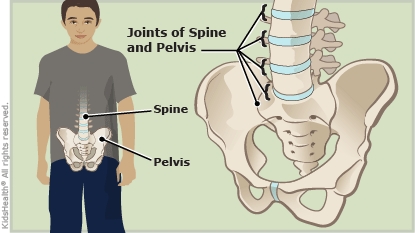
Juvenile ankylosing spondylitis (JAS) is a type of arthritis. It affects the spine (backbone), the pelvis, and large joints of the leg (like the hips). Starting treatment as early as possible can help relieve pain and make other problems less likely. Although there is no cure for JAS, most people who have it can live active, healthy lives.


Your child:

Your child:

What do the words "juvenile ankylosing spondylitis" mean? The words refer to inflammation (redness, heat, pain or swelling) of the joints in the spine, resulting in a stiff or painful back:
What happens in JAS? When a child has JAS, the joints in the spine, pelvis or legs become inflamed. Damage to these joints can lead to pain in the lower back or large joints of the leg. The bones that make up the spine (vertebrae) may eventually fuse together, causing stiffness in the back.
Some kids with JAS have other problems, including:
Symptoms might come and go. Some kids might have only mild symptoms, while others might be more severely affected. It is different in every child.
Who gets JAS? It is seen more often in boys and tends to run in families. Symptoms usually begin in the late teens or young adulthood.
How is JAS treated? The goal of treatment is to help your child have as normal and active a lifestyle as possible. The main treatments for JAS are medicines, exercises and physical therapy to help decrease pain and increase flexibility. If someone has severe pain or joint damage, surgery is sometimes recommended.
