
MRSA is a type of staph bacteria (germ) that doesn't respond to the antibiotics usually used to treat staph infections. This can make MRSA infections harder to treat, but most will heal quickly with proper care.
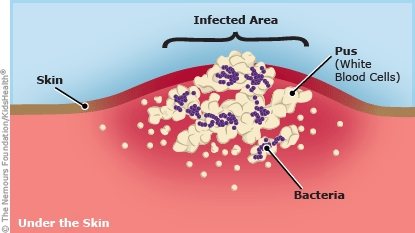




How do MRSA skin infections happen? Staph bacteria, including MRSA, often live on skin or in the nose without causing any problems. Infections can happen if the bacteria enter the body through a wound, insect bite, or other area of broken skin. Sometimes, an infection can happen even where you don't see a break in the skin. Infections also are more likely if a child was in close contact with another person who has MRSA.
Where does the name MRSA come from? MRSA (say: MUR-suh) stands for "methicillin-resistant Staphylococcus aureus." MRSA does not respond well to the usual antibiotics that treat staph infections. Bacteria that are hard to kill are called "resistant." Methicillin is an antibiotic normally used to treat staph, so these bacteria are called "methicillin-resistant.”
How do bacteria like MRSA become resistant to antibiotics? Bacteria become resistant to antibiotics when the medicines are not used properly. This includes:
Taking antibiotics exactly as prescribed can help stop bacteria from becoming resistant to them.
